Introduction
Hip pathologies
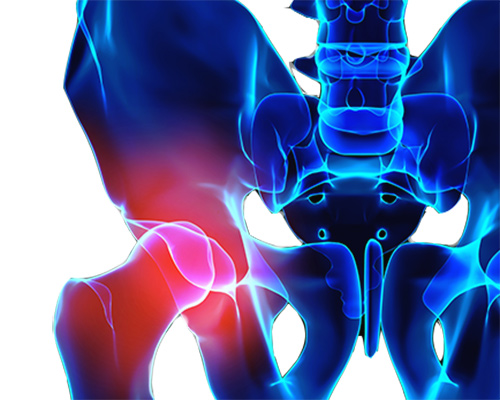
The hip is a spherical joint that supports body weight and enables walking. The most frequent pathologies include coxarthrosis, dysplasia, femoral head necrosis and osteoporotic fractures.
Techniques
Surgical and conservative techniques
Total hip replacement with anterior mini-invasive approach, metal-polyethylene or ceramic-on-ceramic interface, evaluated case by case based on age, activity and functional demand.
Anatomy of the coxofemoral joint
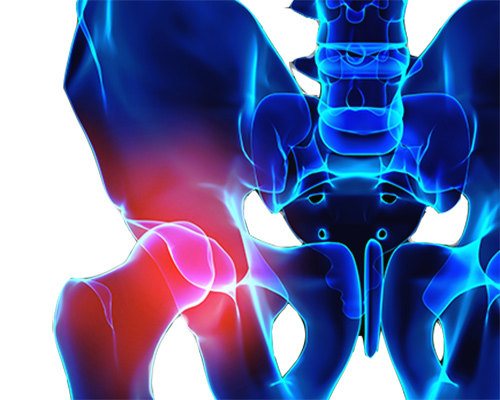
The hip joint — the coxofemoral articulation — is the most important in the body as it bears the entire body weight. The acetabulum, a near-hemispherical socket in the hip bone, receives the femoral head (about 4-5 cm in diameter). The joint capsule, lined internally with cartilage, is sealed by the acetabular labrum and supported by approximately 19 muscle groups, with the gluteal muscles playing the main role in pelvic control.
Modern hip replacement
The microsurgical approach used by Prof. Colao's team preserves bone and minimises muscular damage: patients stand and walk independently within 12 hours. Modern hip arthroplasty involves minimal blood loss, often eliminating the need for post-operative transfusion. Anatomical-collar prostheses in titanium, ceramic or metal allow full restoration of mechanical function; many patients return to sport without joint restriction.
Hip bursitis
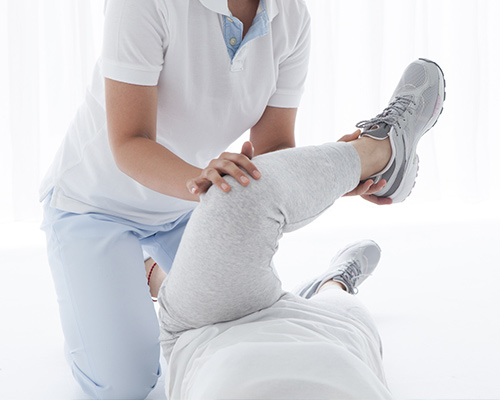
Hip bursitis is an inflammation of a bursa — a fluid-filled sac between bone and joint that prevents friction. Athletes performing repetitive lower-limb movements are most at risk. Left untreated, bursitis tends to become chronic due to cumulative micro-trauma. Ultrasound diagnosis allows rapid assessment of inflammation severity and guides conservative or infiltrative treatment.
Clinical information
Hip replacement
- Procedure
- Total hip replacement via anterior microsurgical approach
- Hospital stay
- Approximately 3 days
- Anaesthesia
- Regional, general or combined anaesthesia
- Post-op course
- Independent walking within 12 hours; progressive weight-bearing in the following days
- Rehabilitation
- 4-6 weeks of progressive rehabilitation; individualised physiotherapy based on muscle condition and functional demand
The information has educational value and does not replace specialist medical examination.
Book a visit