Introduction
Knee pathologies
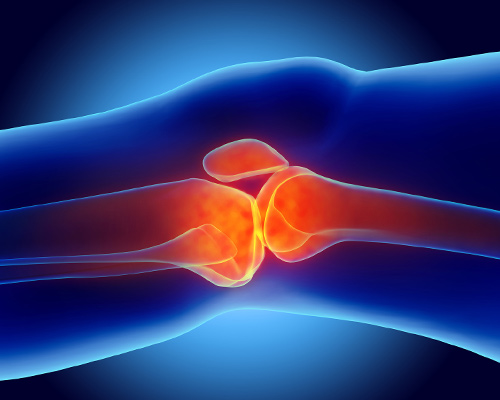
The knee is the largest joint in the human body, made up of femur, tibia, fibula and patella. Meniscal injuries, ligament tears and gonarthrosis are the most common conditions.
Techniques
Surgical and conservative techniques
Total and unicompartmental replacement, arthroscopic ligament reconstructions, infiltrative therapies with growth factors and stem cells in early-stage cases.
Knee anatomy
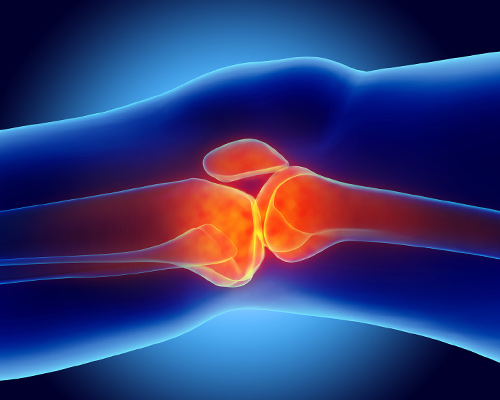
The knee combines stability and mobility to a unique degree among body joints. In full extension it bears almost the entire body weight; in flexion it enables movements that maintain balance on any surface. The joint involves four bones: femur (the longest and strongest bone in the body), tibia (on which the femur rests), fibula (slender and lateral, attachment for muscles and the lateral collateral ligament) and patella, which glides in a femoral groove during movement.
Total knee replacement
The turning point in knee arthroplasty came in 2005 with the introduction of rotating-platform prostheses, which resolved the technical problems of post-operative rehabilitation and gait recovery. Prof. Colao's team uses exclusively ultra-congruent, high anatomical-match prostheses and, systematically, hypoallergenic implants. The mini-incision approach preserves vascularisation and minimises bone loss; the patella is preserved and, when necessary, treated with a reductive plasty rather than resurfaced, avoiding the mechanical complications frequent in American techniques.
Stem cells for the knee
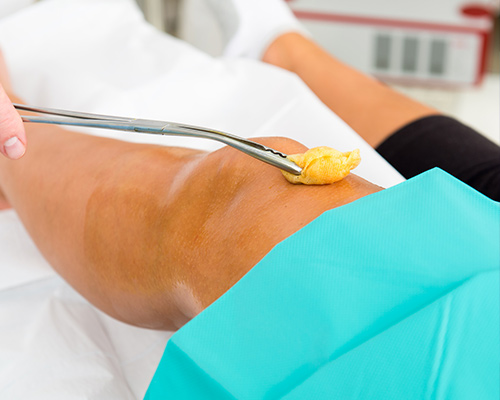
Stem cells have been used in orthopedic knee surgery for over a decade, with particularly significant results in the treatment of cartilage lesions. Cells are harvested from the patient's own adipose tissue (autologous procedure), ensuring no rejection risk. The technique yields best results in younger patients with good biological response and in early-stage osteoarthritis: early intervention often slows deterioration and avoids more invasive prosthetic surgery.
Clinical information
Total knee replacement
- Procedure
- Total knee replacement with hypoallergenic rotating-platform ultra-congruent prosthesis
- Hospital stay
- Approximately 3 days
- Anaesthesia
- Regional, general or combined anaesthesia
- Post-op course
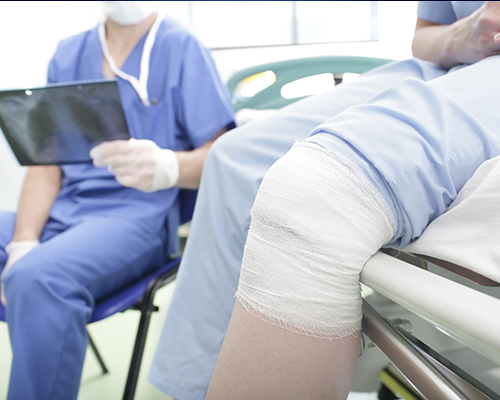
- Progressive weight-bearing from day 3; 4-6 weeks of targeted rehabilitation
- Rehabilitation
- Physiotherapy with progressive flexion-extension exercises; check-ups at 1, 3 and 6 months
Knee stem cell therapy
- Procedure
- Autologous harvest from adipose tissue and ultrasound-guided joint infiltration
- Hospital stay
- Day hospital or day surgery
- Anaesthesia
- Regional or local anaesthesia
- Post-op course
- Light activity resumed within days; progressive biological response over following weeks
- Rehabilitation
- Check-ups at 1, 3 and 6 months; personalised physiotherapy support protocol
The information has educational value and does not replace specialist medical examination.
Book a visit