Introduction
Hand and elbow pathologies
The hand consists of 27 bones connected by tendons, nerves and ligaments. Carpal tunnel, trigger finger, thumb base osteoarthritis and tennis elbow are among the most treated; the elbow benefits from arthroscopy and replacement in advanced cases.
Techniques
Surgical and conservative techniques
Mini-invasive nerve decompression, tendon reconstructions, elbow prosthesis, ultrasound-guided infiltrations.
Hand and elbow anatomy
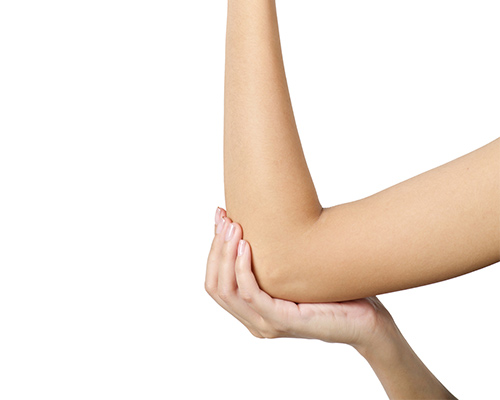
The elbow is a joint composed of three bones — ulna, radius and humerus — forming three distinct articulations: humero-ulnar, humero-radial and proximal radio-ulnar. The hand contains 27 bones organised into carpus (8 bones), metacarpus (5), phalanges (14) and sesamoid bones. This complex structure is connected by an elaborate system of tendons, nerves and ligaments that enables the extraordinary mobility and precision of hand movements.
Carpal tunnel syndrome
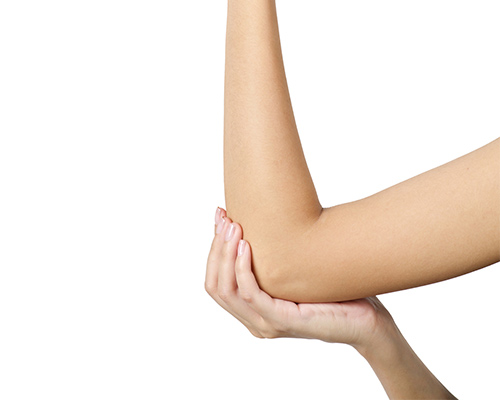
Carpal tunnel syndrome arises from chronic compression of the median nerve at wrist level, within the space bounded by the carpal bones and the transverse ligament. The median nerve controls sensation on the palmar side of the thumb, index, middle and part of the ring finger, as well as the thenar muscles. Symptoms include nocturnal tingling, pain radiating to the forearm, reduced grip strength and difficulty with fine motor tasks.
Lateral epicondylitis (tennis elbow)
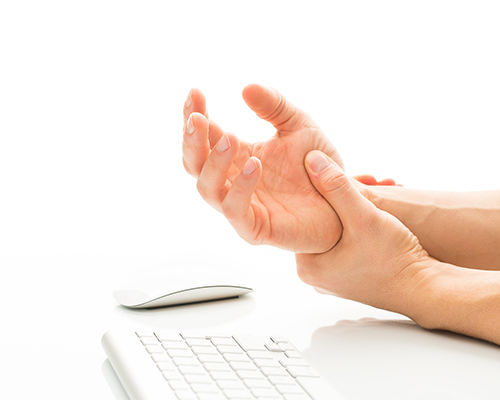
Lateral epicondylitis, commonly known as "tennis elbow", is a chronic inflammation of the wrist and hand extensor tendons at the lateral epicondyle of the humerus. It arises from overuse and repetitive strain of the upper limb, not only in sport but also in occupational settings. Symptoms begin with mild pain during elbow use, progressively worsening until daily activities are impaired.
Clinical information
Carpal tunnel syndrome
- Procedure
- Median nerve decompression (carpal ligament release), mini-invasive
- Hospital stay
- Day surgery — same-day discharge
- Anaesthesia
- Regional or general anaesthesia
- Post-op course
- Light activity resumed 3-5 days post-op
- Rehabilitation
- Progressive mobilisation; outpatient checks at 1, 3 and 6 months
Lateral epicondylitis
- Procedure
- Elbow arthroscopy with tendon release and debridement
- Hospital stay
- Day hospital
- Anaesthesia
- Regional, general or combined anaesthesia
- Post-op course
- Activity resumed at 7 days; full recovery in 4-6 weeks
- Rehabilitation
- Physiotherapy for 4-6 weeks; extensor stretching; 6-month follow-up
The information has educational value and does not replace specialist medical examination.
Book a visit