Overview
Arthroscopy
Arthroscopy is the mini-invasive surgical technique that allows visualisation and treatment of the interior of a joint through small skin incisions — generally two or three access portals a few millimetres in diameter. Through one of these openings the arthroscope is introduced: a slender optical instrument fitted with a high-definition camera that transmits images to a high-resolution monitor. The remaining portals allow the introduction of the micro-surgical instruments required for the procedure.
This approach enables surgery on menisci, ligaments, cartilage, the joint capsule and synovium with considerably less surgical trauma than traditional open techniques. The reduced damage to surrounding tissues translates into less post-operative pain, shorter hospital stays and faster functional recovery.
Prof. Colao uses arthroscopy for the main joints: shoulder, knee, hip and ankle. In some cases, when the pathology presents an extent or complexity that requires full anatomical exposure — such as massive rotator cuff tears or complex tendon reconstructions — arthroscopy is integrated with or replaced by the open microsurgical approach, which provides superior visibility and surgical control.
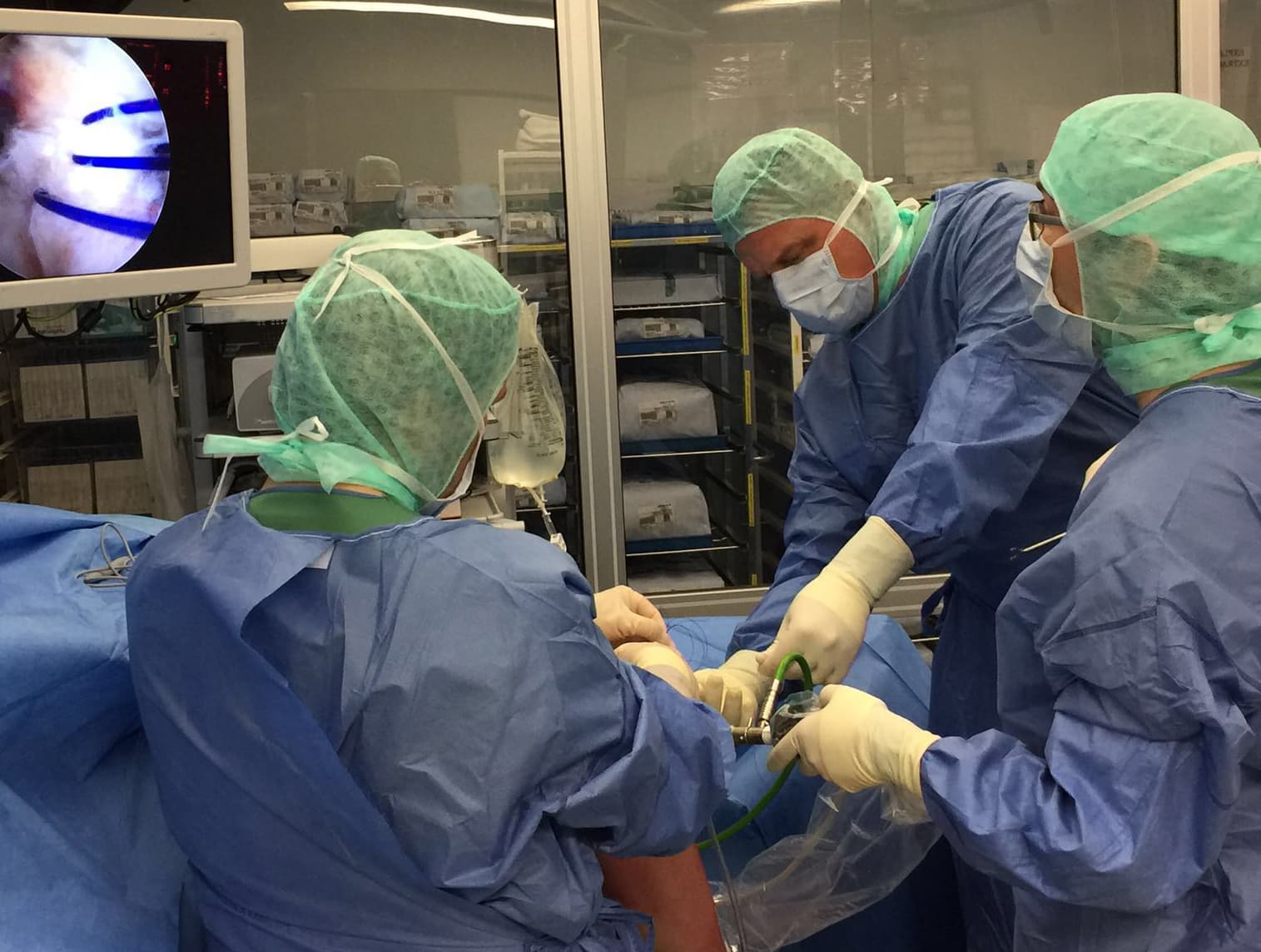
Knee arthroscopy in the operating room.
Techniques
Surgical approach
The main procedures performed arthroscopically include:
- meniscal suture and selective meniscectomy
- anterior cruciate ligament (ACL) reconstruction
- joint debridement and lavage
- rotator cuff repair
- loose body removal
- treatment of osteochondral cartilage lesions
The choice between arthroscopic and open surgery is determined case by case, based on the extent of the lesion, the patient's anatomy and the expected functional outcome.
The information has educational value and does not replace specialist medical examination.
Book a visit